
The Return of the Loons
Image taken by Jeremy Hynes
Spring in Minnesota doesn’t arrive quietly. It announces itself with melting ice, open water, and a sound that feels like home. The first call of a loon drifting across the lake is more than a birdsong–it’s a promise that winter has finally departed. After long, cold days, little sunlight, and sometimes hazardous journeys on icy roads, we Minnesotans excitedly await spring. The echoing cries across lakes that are slowly opening back up spark the beginning of a new season for many of us.
The Sound of Spring
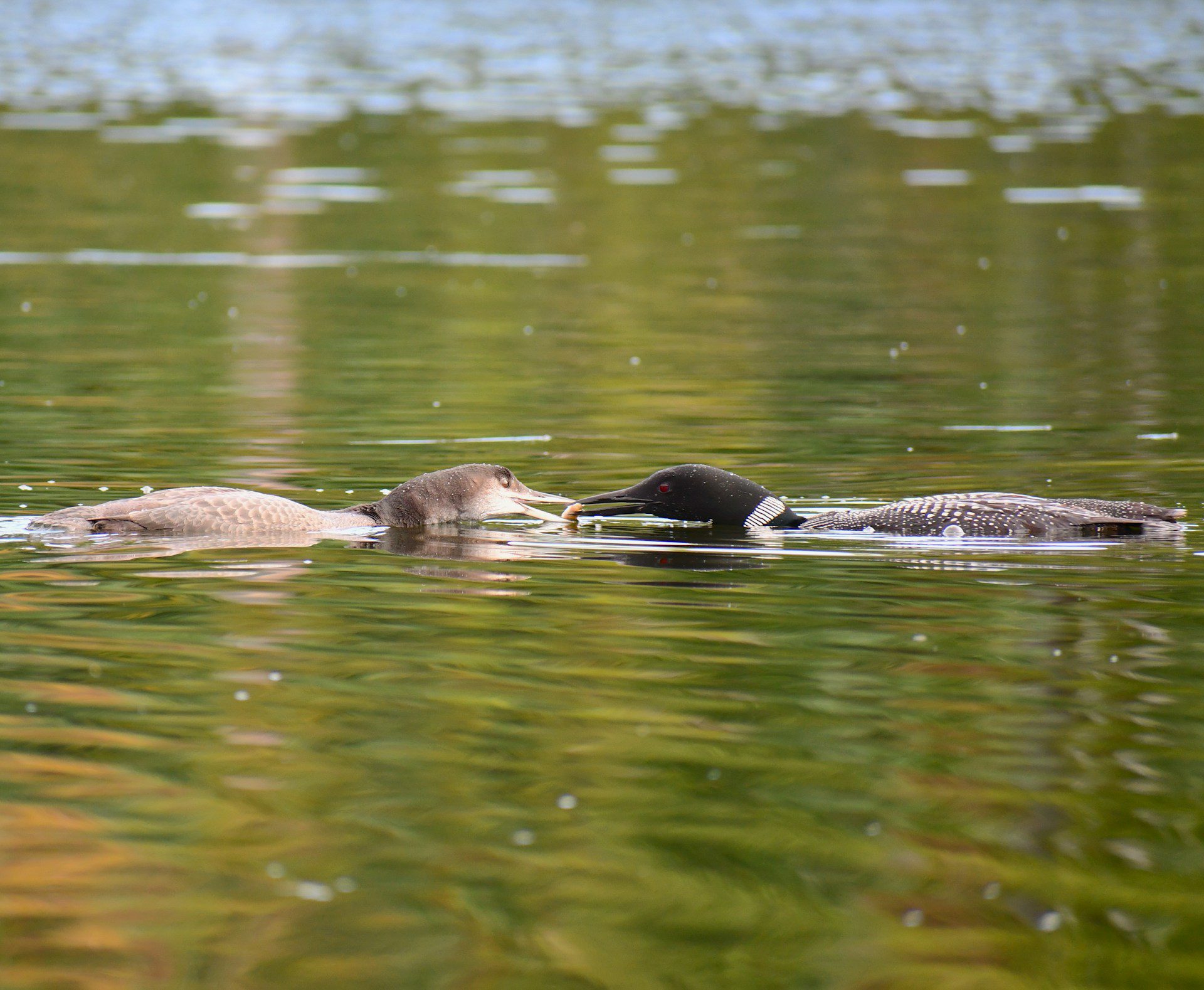
A close up of the male feeding his female mate in the BWCA (Boundary Waters Canoe Area), Ely, Minnesota. Taken by Ralph Katieb.
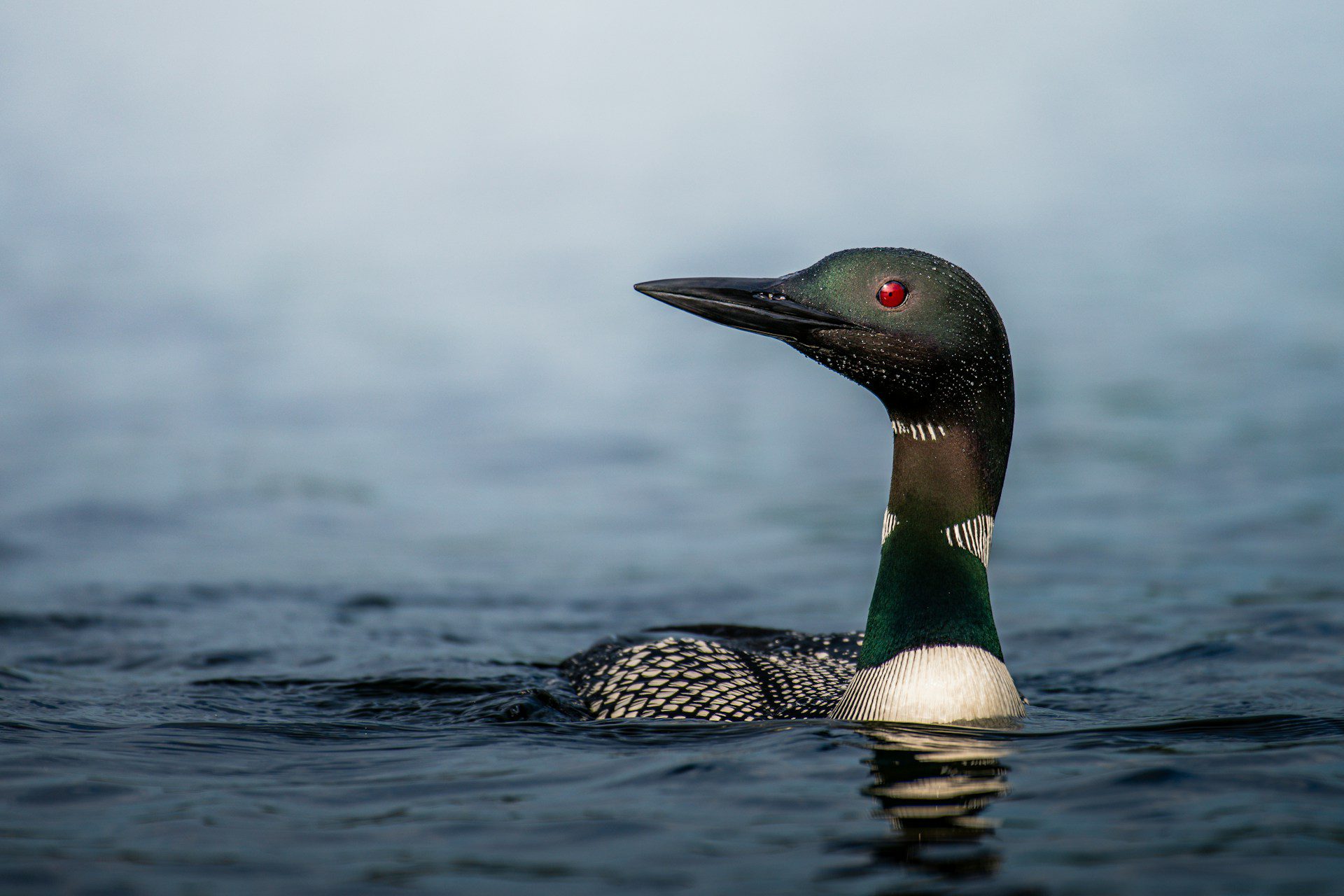
The Common Loon (Gavia immer) is one of North America’s most specialized freshwater diving birds, and one of Minnesota’s most beloved creatures. With dense bones (unlike most birds), powerful legs positioned far back on the body, and webbed feet acting like paddles, loons are exceptional underwater hunters. They can dive more than 200 feet and remain submerged for several minutes while pursuing fish such as perch, minnows, and sunfish. Their striking black-and-white breeding plumage helps with camouflage on shimmering water. At the same time, their red eyes, caused by pigments that filter light, may improve underwater vision, especially in clear northern lakes.
Each spring, an estimated 12,000 adult loons make their way back to Minnesota. I like to think that we love them not just because they’re magnificent, but because they somehow manage to appreciate our lakes more than we do.
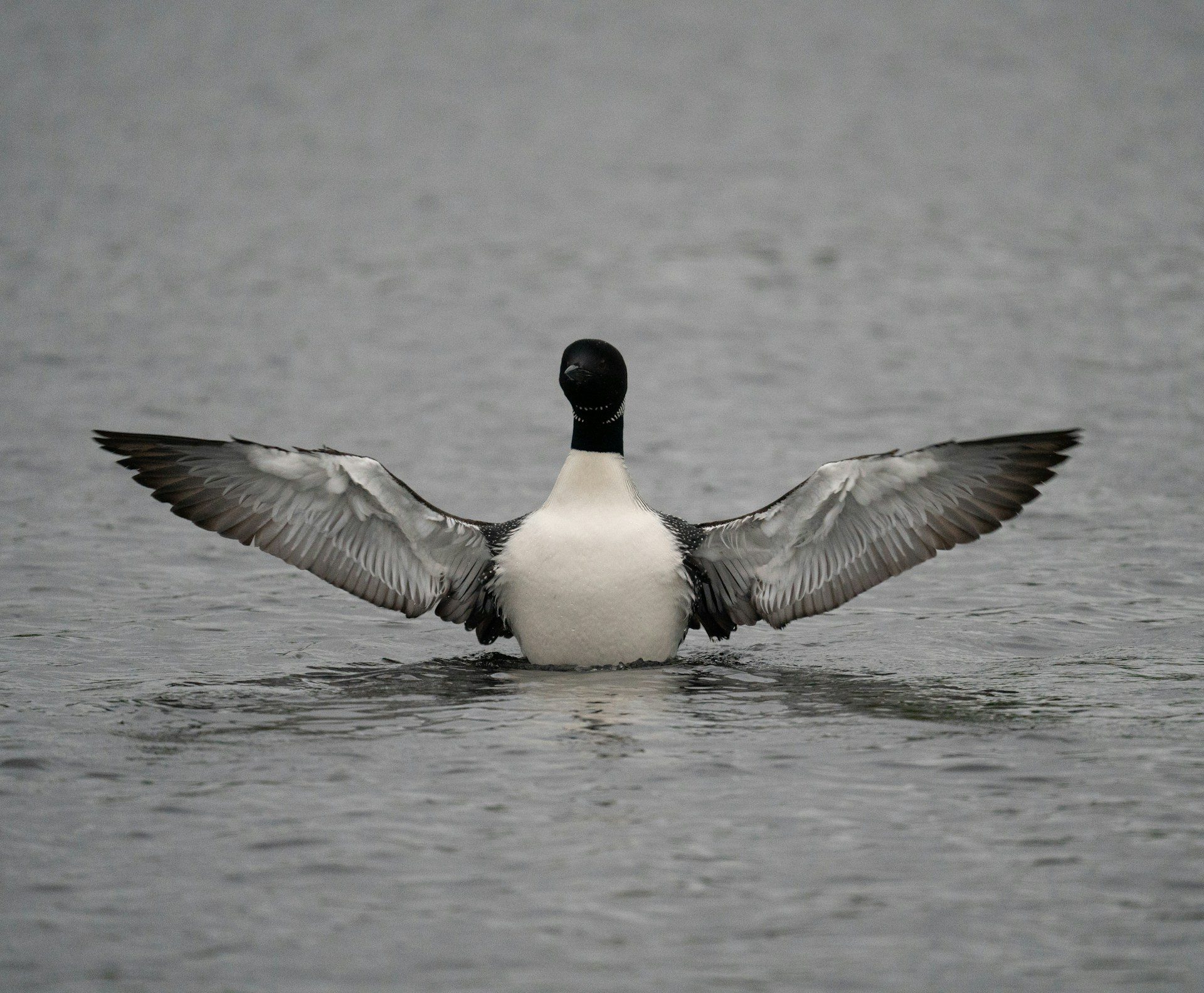
Image taken by Chris Turgeon
The Loon Call
Few sounds are as iconic as the calls of the loon, and each vocalization serves a specific purpose in communication and survival. Like many birds, loons rely heavily on sound to defend territory, maintain pair bonds, and protect their young across wide stretches of water.
The Wail is perhaps the most recognizable call—a long, rising sound often heard at dusk or dawn. Scientists believe this call helps loons locate mates or family members, especially when visibility is low or when adults and chicks become separated across large lakes.
The Tremolo, often described as a laughing or quivering call, usually signals alarm or disturbance. Loons give this call when they feel threatened by predators, boats, or unfamiliar loons entering their territory. It can also function as a warning to nearby birds that danger may be present.
The Yodel is one of the most dramatic calls and is used almost exclusively by male loons. This call serves as a territorial declaration, helping males announce ownership of a lake or nesting area. Each male’s yodel is unique, allowing neighboring loons to recognize individual rivals.
The Hoot is a softer, shorter call used primarily for close-range communication between mates or between adults and chicks. It often signals reassurance and helps maintain family connections without drawing attention from predators.
To listen to each call, visit this page by the Loon Preservation Committee!
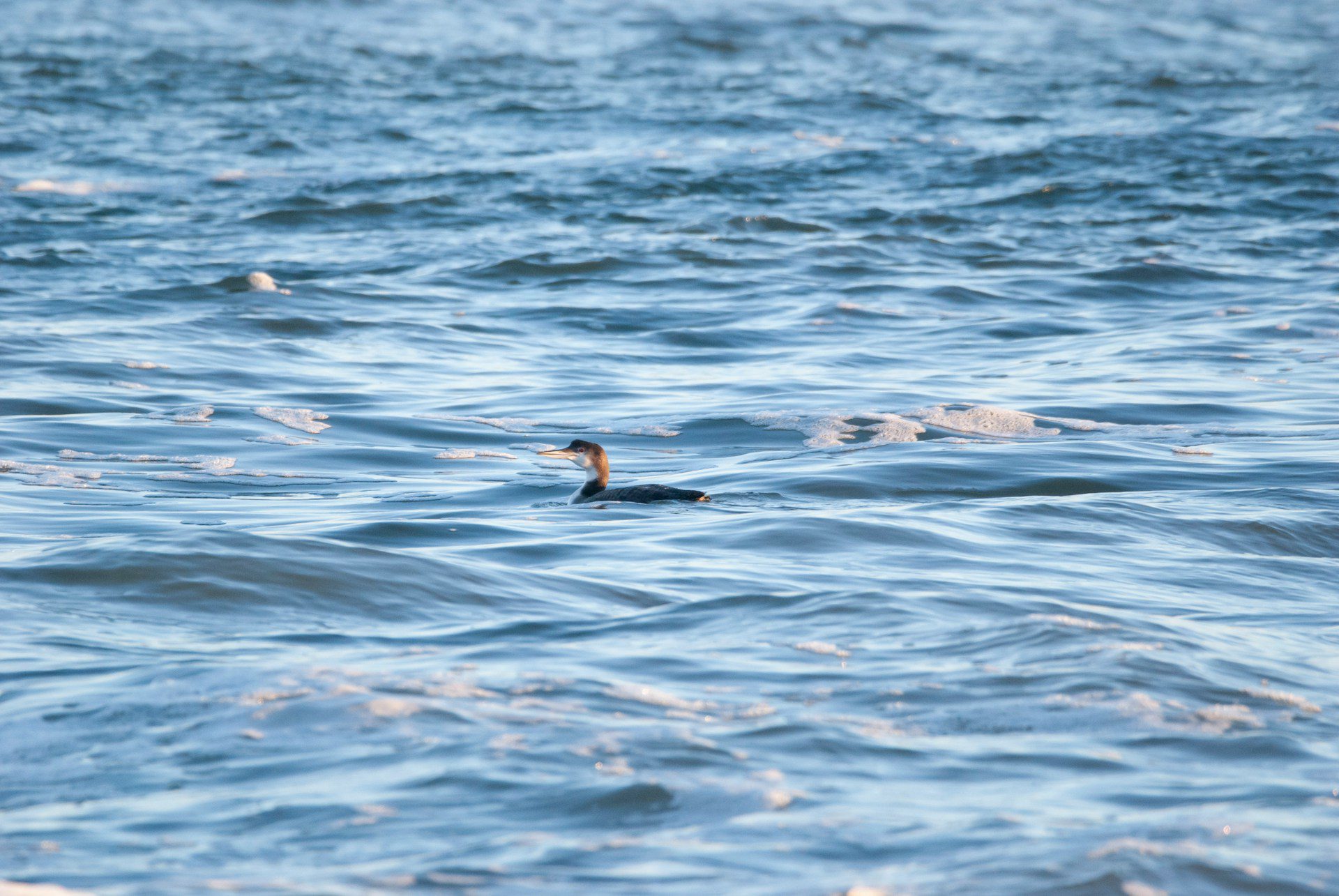
Image of a loon in the ocean taken by Tyler Moulton
Where Have the Loons Been?
Loons, though graceful on the water, aren’t built for life on land! Their bodies are heavy in relation to their wing size, meaning they need a long runway, anywhere from 100 to 600 feet of open water, to take off. While Minnesota’s 10,000+ lakes offer plenty of space in summer, winter leaves those same waters frozen solid.
Each fall, loons migrate south to warmer climates. Adults typically depart in September, with young loons following about a month later. Much like Minnesota’s snowbird retirees, they spread out across sun-soaked coastal regions, from North Carolina to the Gulf of Mexico.
The journey can take weeks. Capable of flying up to 75 miles per hour, some adults cover hundreds of miles in just a few days. Still, migration is no easy feat. Changes in temperature, daylight, and even gravity influence the instincts guiding them south. If you’re curious to learn more about how birds navigate these incredible journeys, check out my other blog post: Migratory Birds: Nature’s Frequent Flyers.
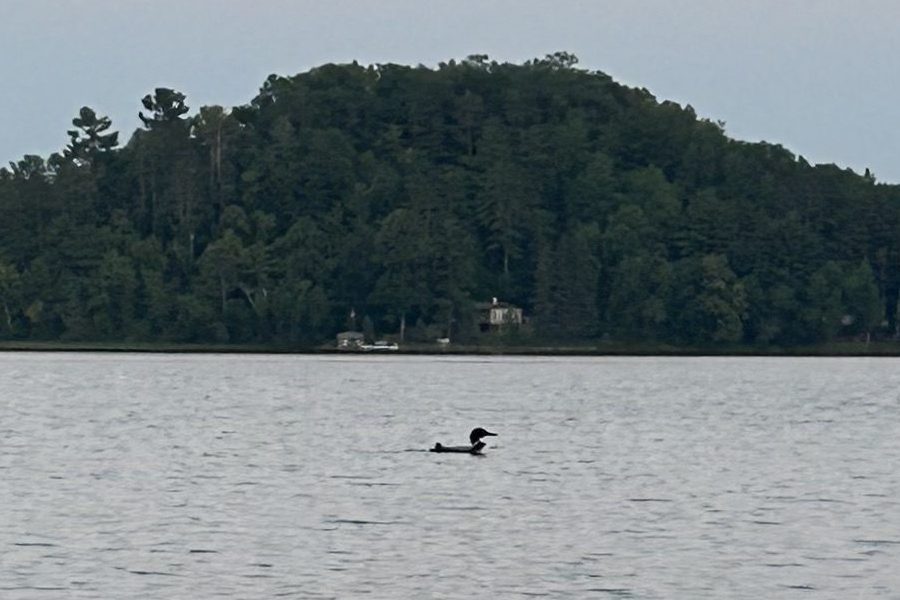
Image of a loon on Fishtrap Lake taken by Brookelyn Sams
When Do Loons Return?
In a race to claim the best breeding territory and impress potential mates, male loons are often the first to return, sometimes as early as mid-April. Females usually follow a week or so later, ready to evaluate both the lake and their male counterparts’ efforts.
Remarkably, loons often return to their chosen lakes on the very day the ice melts. Some researchers believe they arrive in the area early, lingering on nearby open water until their preferred lake becomes accessible. Many, especially younger birds and non-breeding adults, take part in what scientists call prospecting or reconnaissance behavior. These birds fly from lake to lake, briefly landing to assess water clarity, fish availability, shoreline vegetation, and disturbance levels. This scouting helps them locate suitable breeding territories for future seasons. Some loons may visit dozens of lakes over several weeks before choosing a nesting site. These reconnaissance flights play a crucial role in maintaining healthy populations, ensuring that loons continue to spread across suitable lakes year after year.
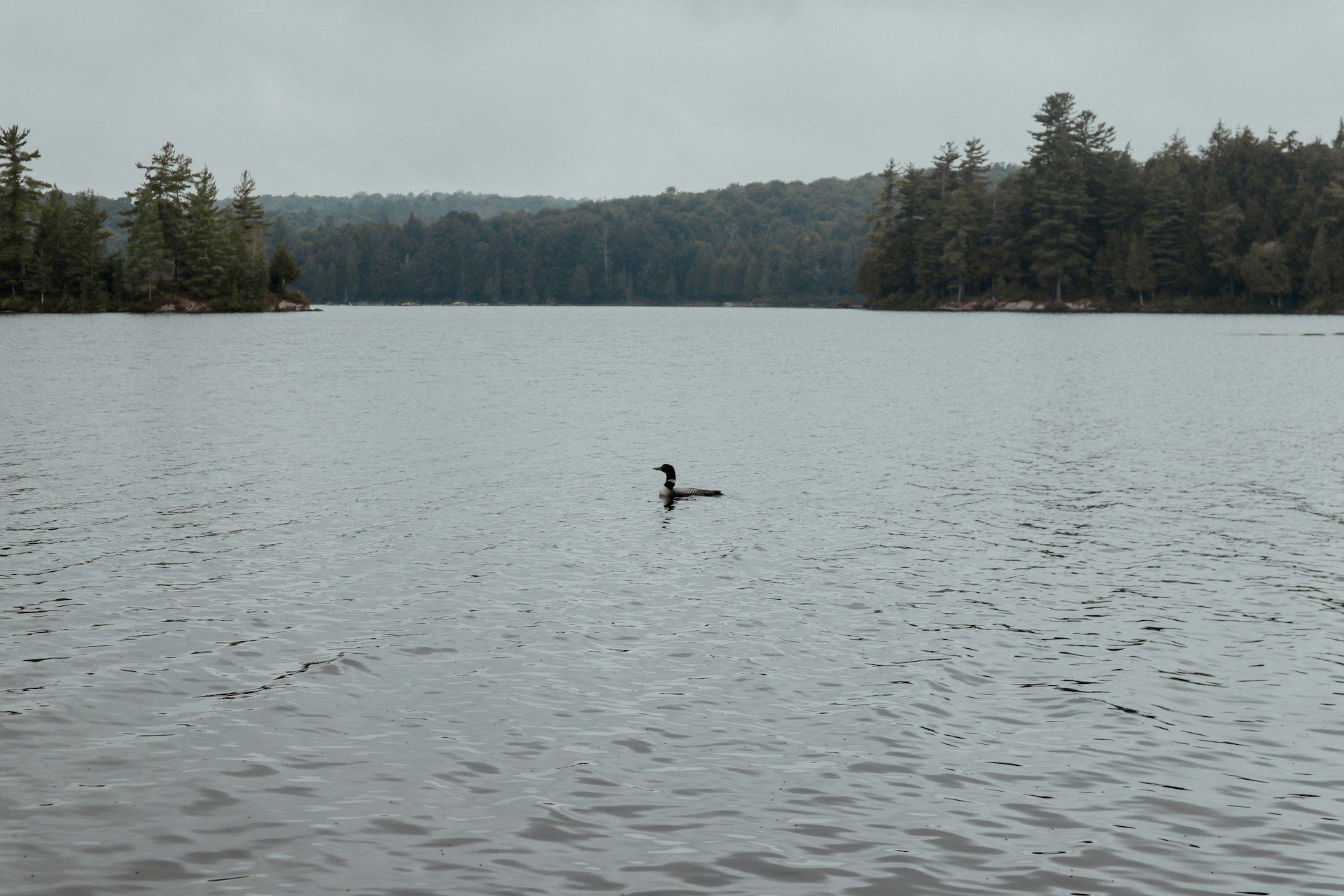
Image taken by Ariana Kaminski
Why Minnesota?
Minnesota hosts the largest breeding population of loons in the lower 48 states. With thousands of clear, fish-filled lakes and long stretches of undeveloped shoreline, our state offers ideal conditions for raising young. Loons need clean water to hunt, quiet nesting areas close to shore, and plenty of space to take off and land. Luckily, Minnesota has all of it!
Many loons return to the same lake year after year, forming a deep connection to the waters they know. In that way, they’re not so different from the people who return to the same cabin, shoreline, or fishing spot each summer. For loons, our lakes aren’t just a stop along the way.
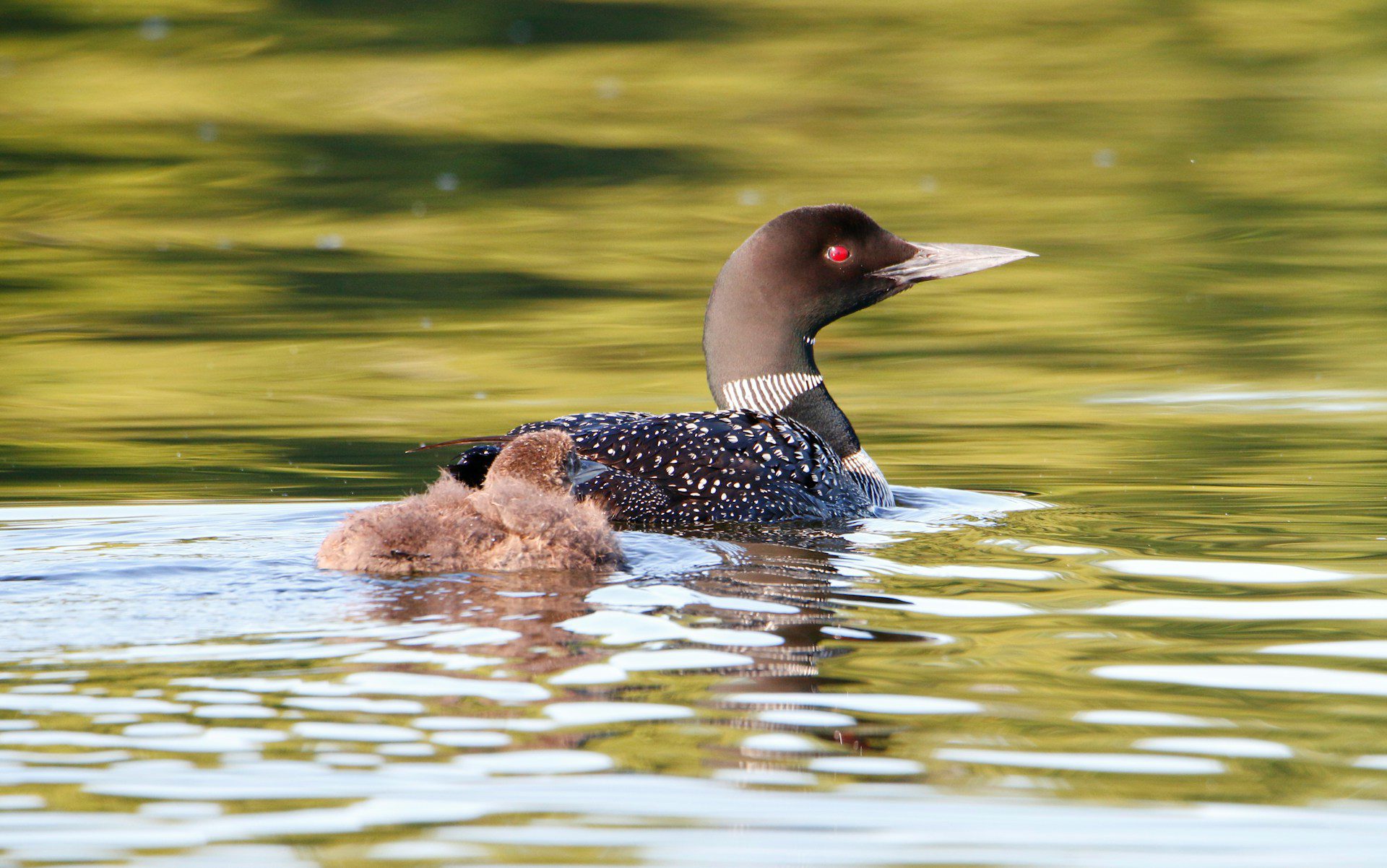
Image taken by Paul Crook
How to Protect Loons
In 1961, the common loon was officially named Minnesota’s state bird, a recognition of both its beauty and its importance. Loons are sensitive indicators of lake health, meaning their success reflects the overall well-being of our waters.
There are simple ways we can help protect them:
- Give nesting loons space: This is especially important in spring and early summer. Avoid boating too close to shore where nests are often hidden.
- Slow down on the water: Reducing boat speeds lowers the risk of collisions and minimizes disruptive wakes near nesting areas.
- Use lead-free fishing tackle: Lead ingestion is one of the leading causes of loon mortality.
- Protect shoreline habitat: Limit development and preserve natural vegetation.
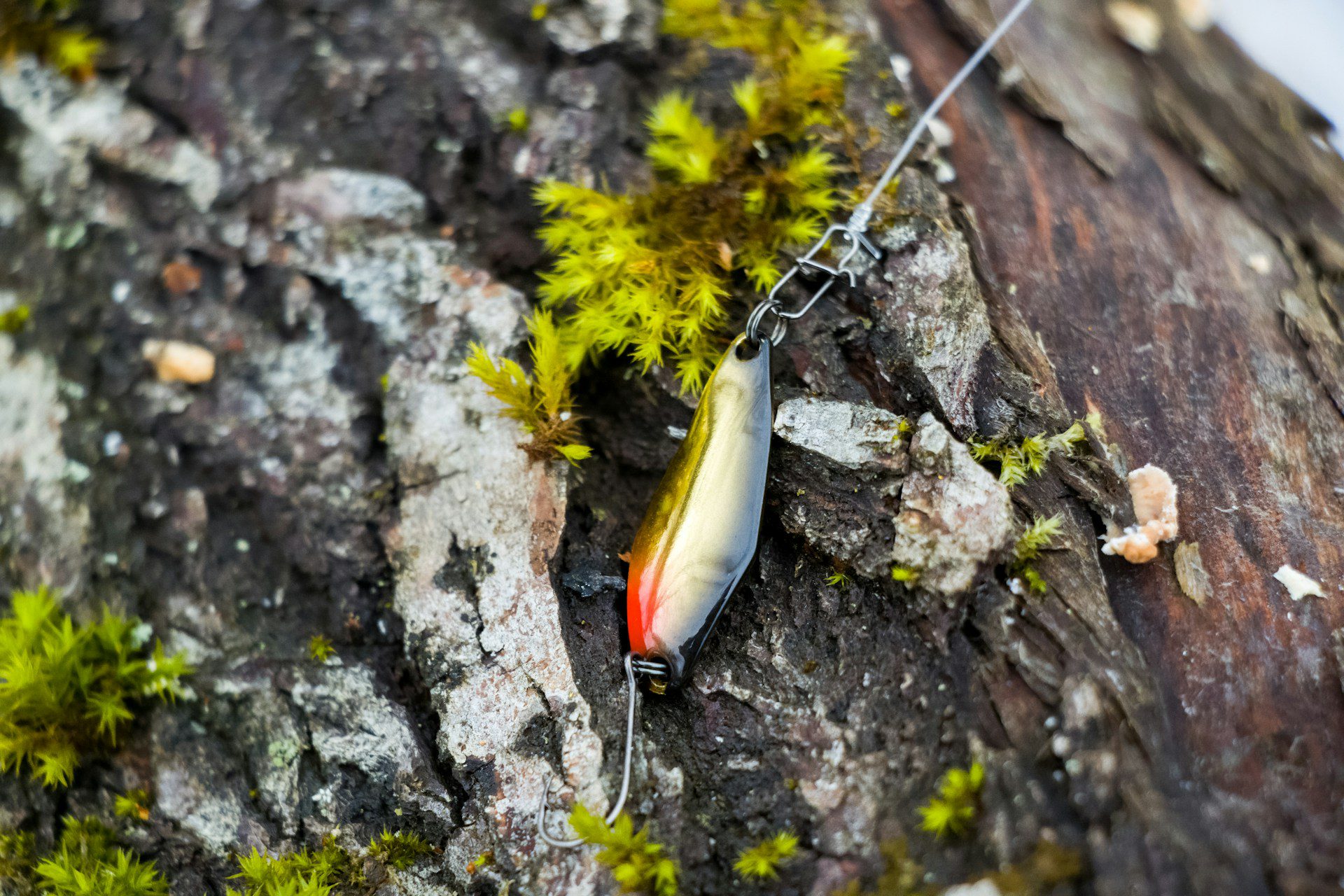
Image taken by Serge Shpak
A special note on lead poisoning:
One of the leading causes of adult loon mortality is lead poisoning, often from ingesting lost fishing tackle. Loons swallow small stones, called gastroliths, to help grind food in their gizzards. Unfortunately, lead sinkers or jig heads can be mistaken for these stones. Once swallowed, stomach acids dissolve the lead, allowing it to enter the bloodstream and disrupt the nervous and digestive systems. Even a single small lead weight can be fatal. Studies across northern states have shown that lead ingestion accounts for a significant percentage of adult loon deaths (some studies have shown that lead ingestion accounts for nearly 50% of adult loon fatalities, while others estimate the numbers look closer to 20-25%), which is why many conservation groups now promote the use of non-lead fishing alternatives like tungsten or steel.
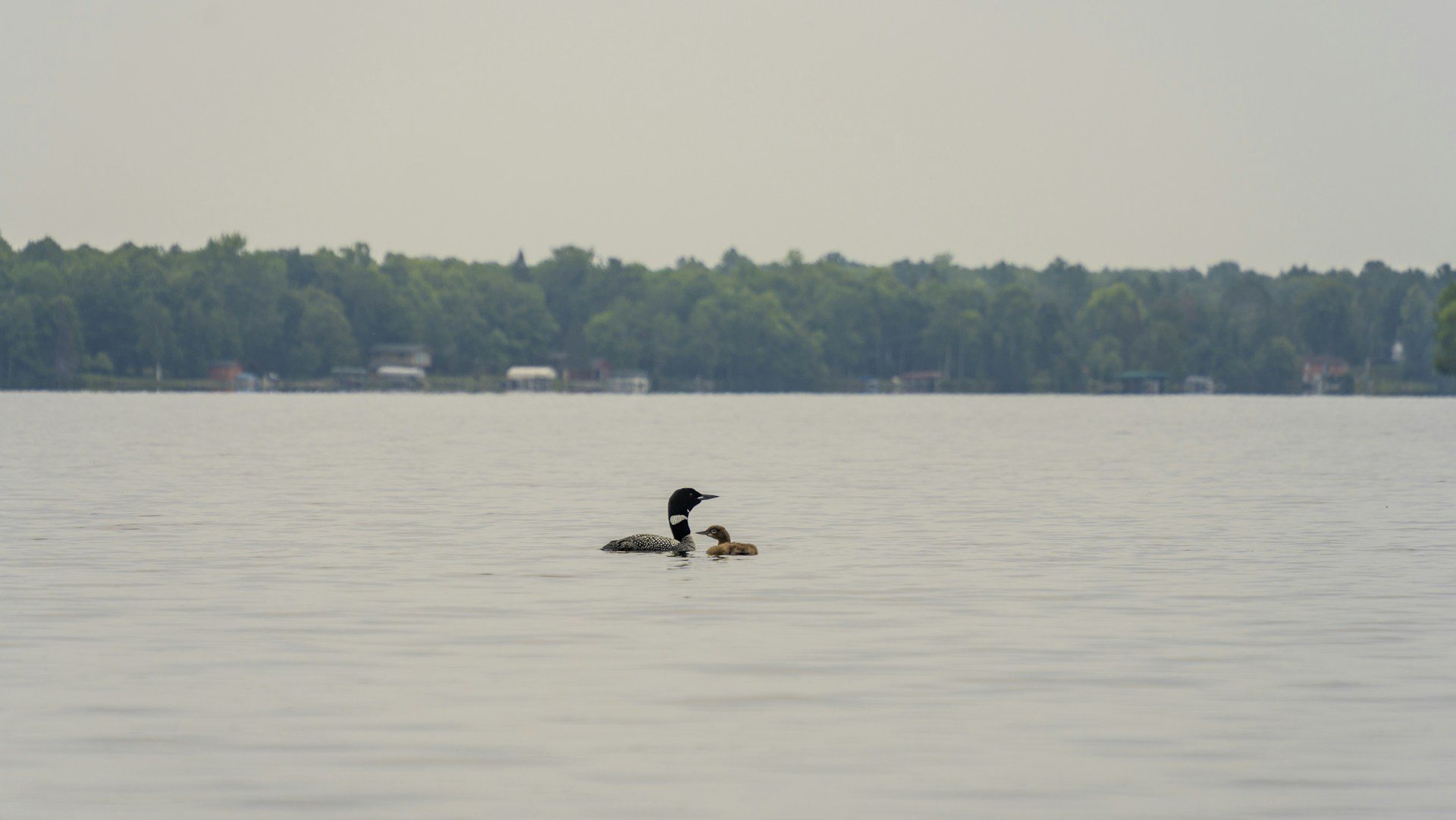
Image taken by Kelly Sikkema
A Call That Sounds Like Home
For many of us, the call of a loon is stitched into our memory of spring and summer. It’s the sound of ice-out, of quiet mornings by the water, of life returning after a long winter. Their haunting cries remind us to slow down, listen, and appreciate the wild spaces that make Minnesota special.
If you want a front row spot to watch and listen to the loons, come to Campfire Bay Resort! Our lake is home to multiple resident loon pairs, and they are often spotted carrying their young.